
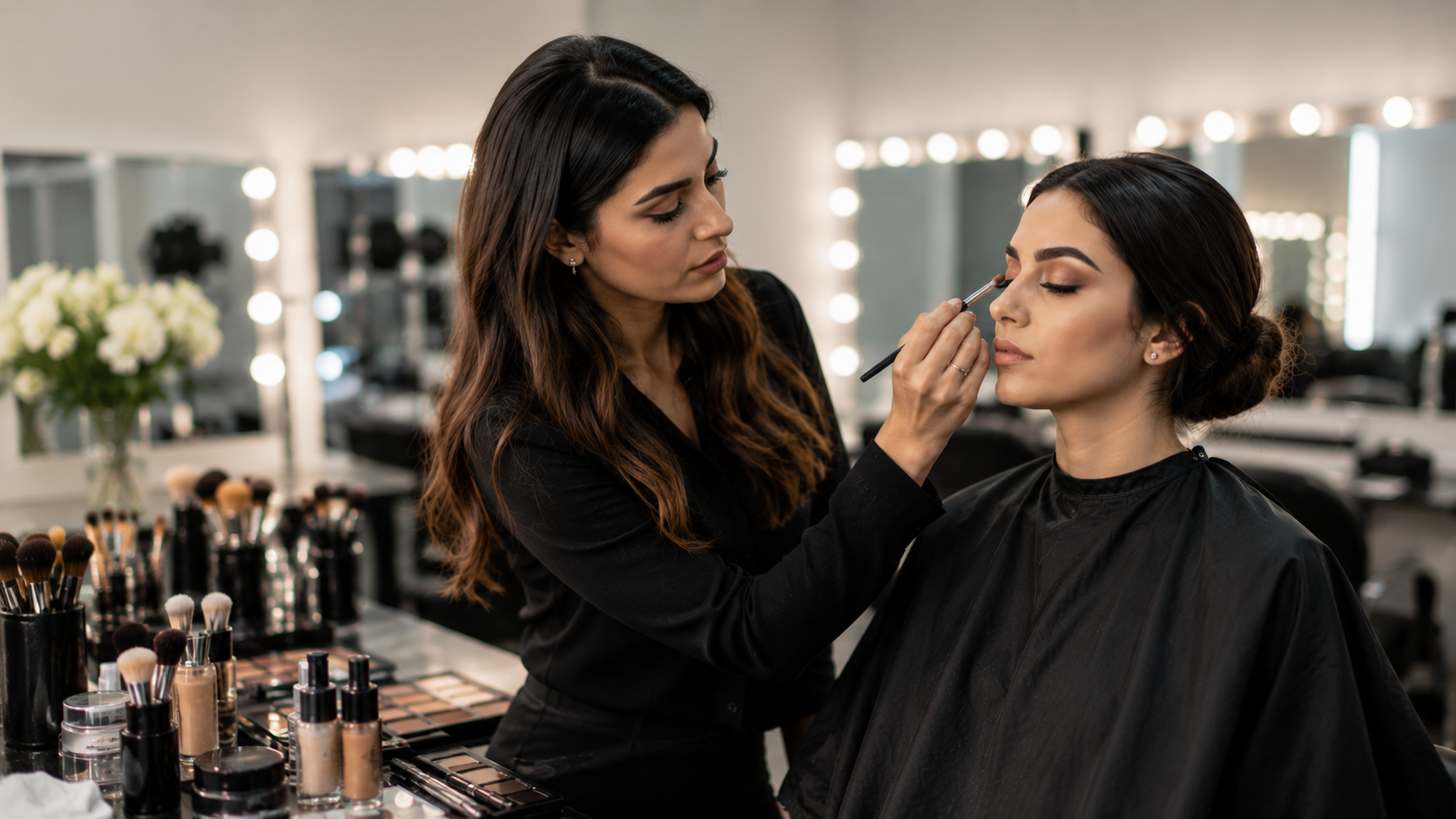
Choosing between beauty schools in Dubai can feel confusing, especially when every course seems to use different words around approval, certificates and qualifications. If you are comparing KHDA accredited beauty courses, the first thing to understand is simple: KHDA matters because it is connected to how private education and training are regulated in Dubai.
KHDA, the Knowledge and Human Development Authority, is the Dubai government authority responsible for the growth and quality of private education in the emirate. For students looking at a KHDA makeup course or a KHDA diploma makeup pathway, this gives useful reassurance that the training sits within a recognised education framework rather than being a casual, unstructured class.
What does KHDA mean in plain English?
KHDA stands for Knowledge and Human Development Authority. In everyday terms, it is the education regulator students often look for when choosing private training in Dubai.
When people search for KHDA accredited beauty courses, they are usually looking for three things:
- A course provider that operates legitimately in Dubai
- A certificate or diploma that feels credible
- Training that has more structure than a one-off workshop
However, it is important to use the language carefully. KHDA regulates private education and training in Dubai, while Qualifications and Awards in Dubai, known as QAD, is the KHDA arm responsible for regulating technical and vocational education and training, and quality assuring TVET qualifications in Dubai.
Therefore, when you see KHDA connected to a beauty course, you should check exactly what is approved, who awards the certificate and whether the course fits your career goal.
Why KHDA matters for beauty and makeup students
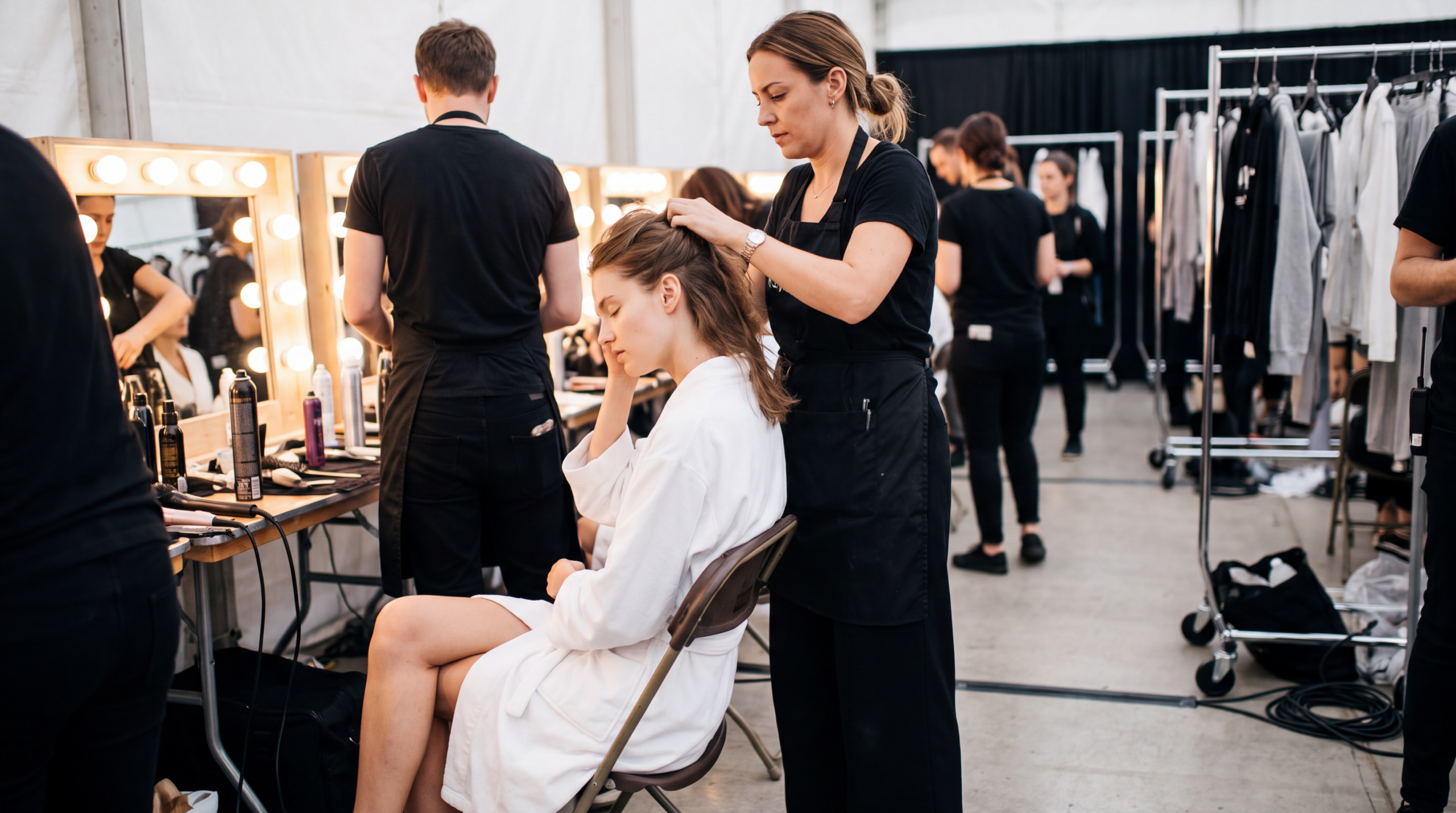
Beauty education is practical, personal and close-contact. Students are not just learning colour placement or product use. They are learning how to work safely on real clients, manage hygiene, understand skin, follow a brief and behave professionally in a salon, bridal suite, studio or backstage environment.
For this reason, KHDA accredited beauty courses can give students extra confidence. They suggest that the provider has had to think about course structure, approved training activity and educational delivery in Dubai.
In addition, Dubai attracts students from the UAE, India, the wider Middle East, Europe and beyond. Many students want a course that helps them train in an international environment, build confidence and show future clients that they took their education seriously.
What KHDA accreditation does not mean
A KHDA connection is valuable, but it does not replace artistry, practice or portfolio quality.
A KHDA makeup course does not automatically make you a fully booked artist. It does not guarantee that every client will choose you, and it does not replace the need to practise on different skin tones, face shapes and ages. Similarly, a KHDA diploma makeup certificate is not the same thing as a finished portfolio.
Instead, think of KHDA as one important part of the decision. It supports trust, but your career still depends on:
- The quality of the teaching
- The amount of hands-on practice
- The range of techniques covered
- Tutor experience
- Portfolio development
- Aftercare and career support
- Your own consistency after training
Ultimately, accreditation gives a framework. Skill still comes from training, repetition and professional behaviour.
KHDA, QAD and vocational training in Dubai
For beauty students, vocational training matters because makeup is a skill-based profession. You need practical ability, not just theory.
KHDA states that QAD is responsible for regulating the technical and vocational education and training sector and quality assuring TVET qualifications in Dubai. It also says QAD aims to provide technical and vocational qualifications developed by industry for industry.
This is useful context if you are looking at KHDA accredited beauty courses because makeup, hair and beauty training should prepare you for real work. A good course should not only teach trends. It should teach technique, hygiene, client communication, product knowledge, time management and professional standards.
What students should check before enrolling
Before choosing a beauty or makeup course in Dubai, do not rely on one badge or one phrase. Ask clear questions.
Ask what certificate you receive
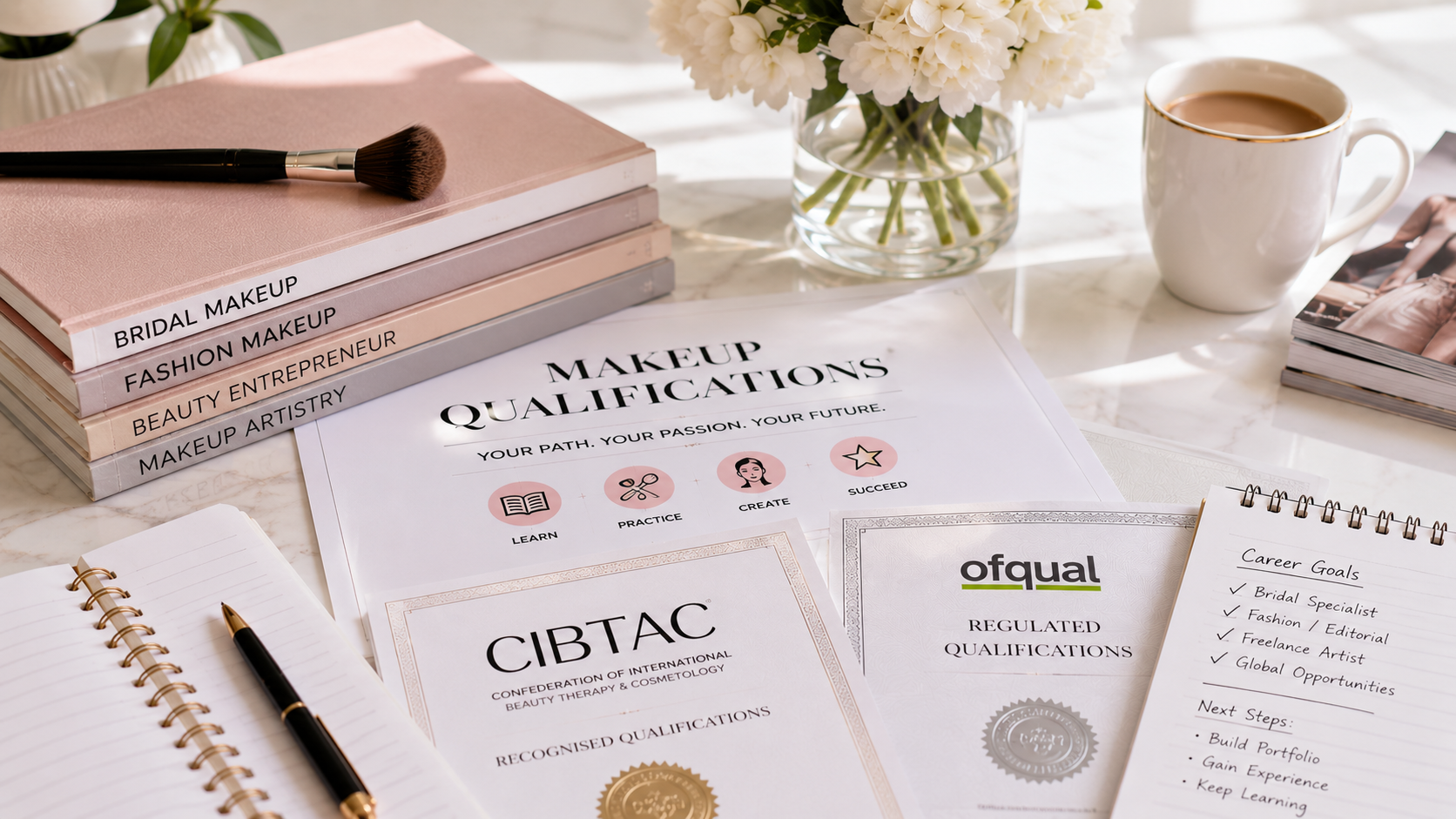
Find out whether the certificate is KHDA related, internationally accredited, internally awarded or connected to another awarding body. AOFM’s qualifications page states that its international academies and courses are accredited by several government-regulated accreditation and awarding bodies, including KHDA and QAD, as well as CIBTAC, BABTAC, City & Guilds and Ofqual-related qualifications.
This matters because students often want to travel or work internationally. Therefore, the strongest option may combine local Dubai recognition with wider international credibility.
Ask what the course actually teaches
A certificate means very little if the content is too thin. Look for training that includes skin analysis, colour theory, undertones, foundation matching, hygiene, bridal, fashion, hair styling, SFX or portfolio work, depending on your goal.
AOFM’s Dubai school page says its course range is suitable for all skill levels, from beginner to advanced, and covers areas such as Special FX and fashion makeup. It also states that the same high-quality tuition is offered in Dubai as at its other schools.
Why AOFM is relevant to KHDA beauty training
AOFM is a useful example of how a beauty academy can combine Dubai-based course approval with an international makeup school model.
The academy offers Dubai training across makeup, hair, bridal, fashion, editorial, SFX, Arabic and Asian makeup, airbrush and social media makeup. Its 9-week Dubai programme, for example, includes professional makeup artistry and hairstyling, beauty, pro bridal, fashion, editorial, photographic, avant-garde, airbrush, Arabic and Asian, SFX, media makeup, theatre, social media, international runway, self-marketing and career building.
That range is important because students rarely build a career from one look. A bridal artist may need hair skills. A fashion artist may need editorial confidence. Meanwhile, a travelling artist may need to understand different cultural beauty preferences and product performance in different climates.
KHDA makeup course versus short workshop
A short workshop can be useful when you want to learn one skill, such as brows, airbrush, SFX cuts or social media makeup. However, if you are building a career, you should think beyond a single technique.
A structured KHDA makeup course should help you understand the full professional process. That includes preparation, client consultation, hygiene, application, finishing, photography awareness and aftercare. In contrast, a casual workshop may teach a look without teaching the standards behind it.
This is why many students start with a foundation course, then move into advanced makeup, bridal, hair or SFX. In practice, this route builds confidence step by step rather than overwhelming you on day one.
What about KHDA certificates and attestation?
Students often ask whether a certificate can be attested. KHDA’s certificate attestation service allows training institutes to request attestation of certificates for registered trainees enrolled in authorised training courses conducted at private training institutes in Dubai.
This can matter if you need documentation for work, further study or professional records. However, you should always ask the school what applies to your specific course before enrolling, because certificates, diplomas and awards can vary.
How to choose between KHDA accredited beauty courses
When comparing KHDA accredited beauty courses, use a practical checklist.
Look for:
- Clear course outcomes
- Hands-on training on real faces
- Tutor experience in the current industry
- Hygiene and safety training
- Product knowledge across professional brands
- Portfolio support
- Career advice and aftercare
- Honest information about certificates and eligibility
- Courses that match your level, beginner, intermediate or advanced
In addition, think about your future market. If you want bridal work, choose training that includes long-wear makeup, hair awareness and client consultation. If you want fashion, look for editorial, runway and photographic makeup. If you want film, theatre or creative work, consider SFX and media makeup.
Does KHDA accreditation help international students?
Yes, it can help international students feel more confident about studying in Dubai. It shows that education and training in the city operate within a recognised framework.
However, international students should also consider the course format, language of teaching, visa requirements, dates, accommodation, kit needs and whether the qualification makes sense in their home market. AOFM’s Arabic and Asian Makeup course page, for example, says international students are welcome and notes that visa procedures differ by nationality.
For many students travelling from India or other countries, Dubai is attractive because it offers a luxury beauty market, strong bridal demand and an international client mix. Therefore, the right Dubai course can support both skill and confidence.
Frequently asked questions
What are KHDA accredited beauty courses?
KHDA accredited beauty courses are beauty or makeup training programmes connected to Dubai’s education and training regulation framework. Students should check the exact approval, certificate and awarding body before enrolling.
Is a KHDA makeup course worth it?
A KHDA makeup course can be worth it if it combines recognised training structure with strong practical teaching, professional tutors and portfolio support. However, accreditation alone is not enough. You still need consistent practice and strong presentation.
What is a KHDA diploma makeup course?
A KHDA diploma makeup course usually refers to a more structured makeup training route in Dubai that gives students a formal certificate or diploma. The exact meaning depends on the provider, so always check the course details.
Should I choose KHDA or international accreditation?
Ideally, look for both where relevant. KHDA helps with Dubai-based education recognition, while international awarding bodies can support students who want to travel or work across different markets.
Final thought
KHDA matters because it gives students a clearer way to judge beauty training in Dubai. It helps separate serious education from casual, unstructured learning. However, the best decision is never based on KHDA alone.
If you are comparing KHDA accredited beauty courses, look at the full picture. Ask what the course teaches, who teaches it, what certificate you receive and how the school supports you after training. AOFM is relevant because it combines Dubai course recognition with international makeup education, practical artistry and career-focused support. For serious students, that combination is what turns a course into a professional starting point.
 Live Chat
